
Top image: CAF, via Infraestruturas de Portugal
Portugal has 1,792 km of electrified lines, about 70% of the 2,525 km in service, according to CP. The remaining lines have no overhead wires. In the European Union, the electrified share of the network rose from 53.8% to 57.4% between 2013 and 2023, but more than 80% of rail services already use electricity, according to CER, the European association of railway companies.
For lines without overhead wires, besides biofuels, there are two ways to do without diesel while keeping electric traction: storing the energy as hydrogen, which a fuel cell turns into electricity, or in batteries. Both already carry passengers. This article compares how they work, how much energy they use, what they cost and on which lines each one fits.
How each one works
In a hydrogen train, a fuel cell produces the electricity for the motors and batteries store energy. On Alstom's Coradia iLint, each kilogram of hydrogen replaces about 4.5 litres of diesel, and the train runs more than 1,000 km on one fill. The 14 iLint trains that entered service in Lower Saxony in 2022, between Cuxhaven, Bremerhaven, Bremervörde and Buxtehude, refuel every day at a Linde station in Bremervörde, with 64 tanks at 500 bar and capacity for 1,800 kg of hydrogen.
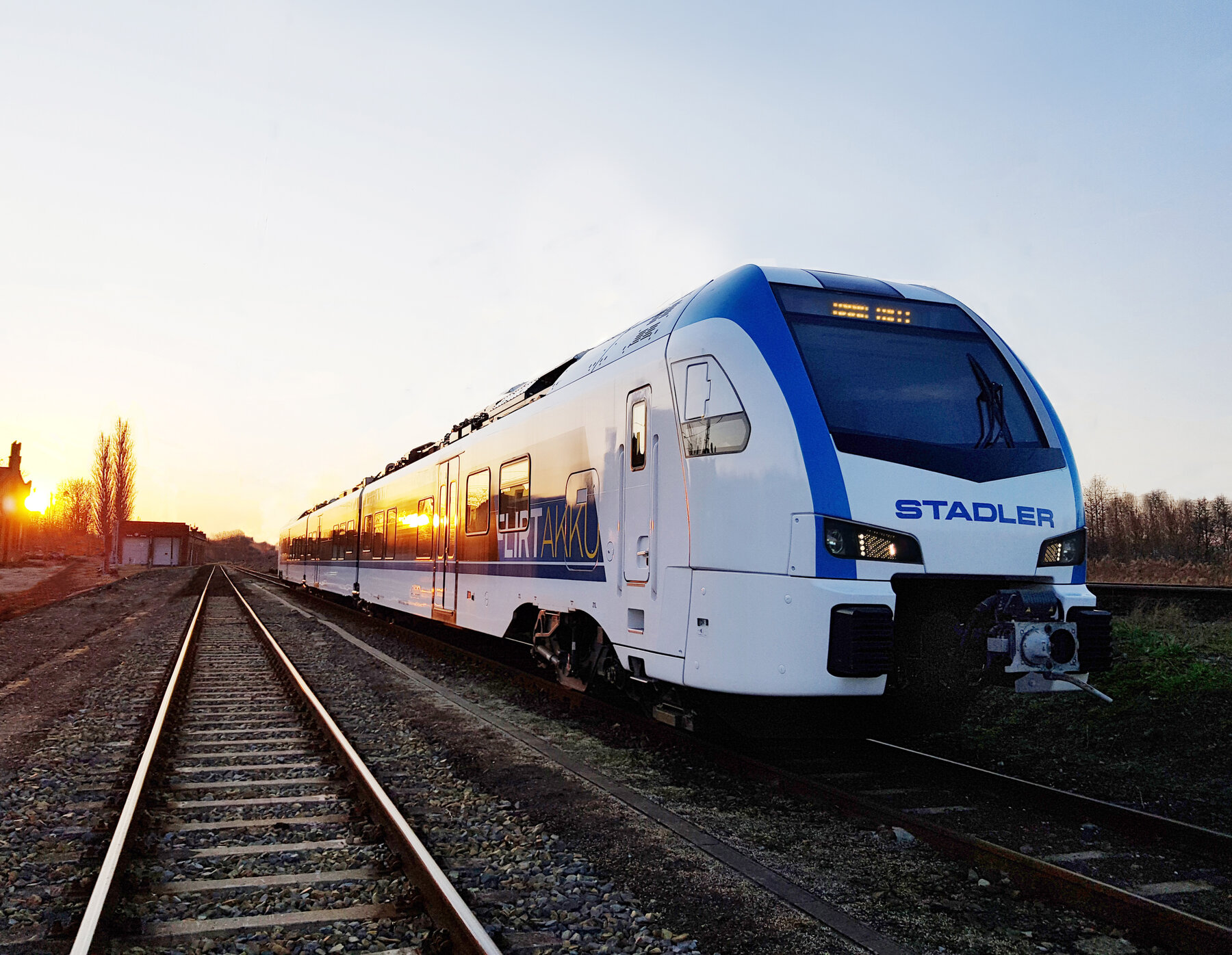
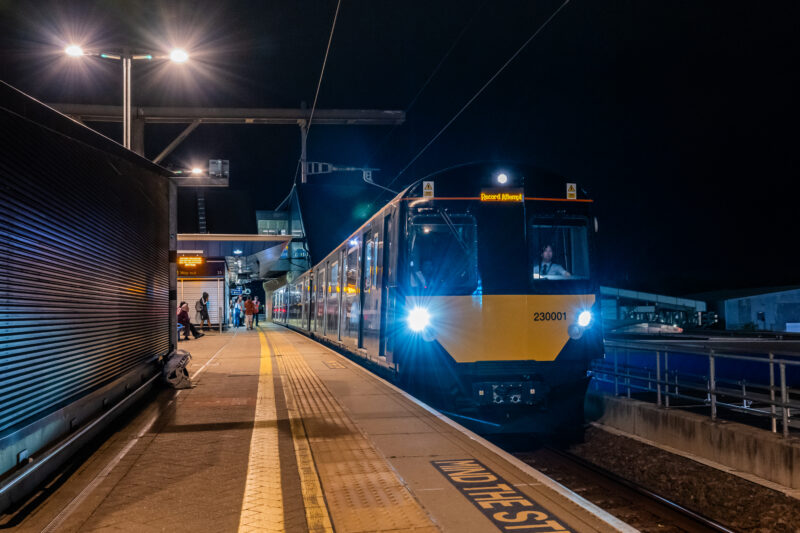
Battery trains can charge under overhead wires, at fast-charging points and when braking. The Stadler FLIRT Akku trains ordered by ÖBB in Austria charge while running under overhead wires and while braking, and use that energy on sections without wires. The Great Western Railway (GWR) battery train in the United Kingdom charges at a fast-charging point at West Ealing station, without overhead wires. On that train, the batteries also power heating and lighting, which typically account for 30% of the energy used, according to the International Railway Journal.
How much energy they use
A study by Delft University of Technology, published in 2024 in Energy Conversion and Management, compared the alternatives for the non-electrified lines in the north of the Netherlands, taking as the reference the diesel hybrid train that runs there. The battery train reduces on-board energy use by 59% to 66%; the fuel cell train by 7% to 10%. Emissions depend on where the energy comes from.
| Technology | Energy used on board | Emissions with renewable energy | Emissions with other sources |
|---|---|---|---|
| Batteries | -59% to -66% | Zero (renewable electricity) | -68% to -73% (with the EU electricity generation mix expected for 2030) |
| Fuel cell and batteries | -7% to -10% | About -90% (hydrogen produced with wind power) | Increase (hydrogen from natural gas or from electrolysis with grid electricity) |
What they cost
In October 2022, a study commissioned by the German state of Baden-Württemberg concluded that, over 30 years, hydrogen trains can cost up to 80% more than electrifying the lines or using battery hybrid trains. In July 2023, Lower Saxony, the region that launched the first line served only by hydrogen trains, announced a tender for 102 battery trains, which will start replacing diesel trains from 2029, because they have the lowest overall cost; the hydrogen trains remain on their services. CER, citing Roland Berger, states that new traction systems can cost 20% or more per train-kilometre than diesel, depending on the line.
Where each one fits
Hydrogen: long lines without overhead wires. A 2022 study for the European association of rolling stock lessors (AERRL) points to hydrogen for passenger routes over 200 km without electrification. Renfe is studying it for regional services over 200 km. In Italy, FNM ruled out overhead wires and batteries on the Brescia-Edolo line, with 103 km, 28 tunnels and a height difference of more than 500 m, and chose 14 hydrogen trains, which cost 183.2 million euros. In France, the 12 Régiolis H2 trains, with a range of 600 km, are due to enter commercial service in mid-2027, according to SNCF.
Batteries: partly electrified lines and sections of up to about 100 km. According to the same study, successful battery applications cover about 100 km. That is the range of ÖBB's FLIRT Akku trains, which Stadler says is enough for nearly all of Austria's lines without overhead wires: ÖBB signed a framework contract for up to 120 trains and has ordered 23 so far, for the Kamptal and Erlauftal lines, with the first deliveries due in 2028. GWR wants trains able to run more than 96 km between charges to replace its diesel fleet.
Distance records show how far each technology can go, under test conditions. On 20 August 2025, GWR battery train 230001, a former London Underground District line unit, covered 320.8 km on a single charge, between Reading, London and Oxford, and finished with about 22% of its charge left. The previous record, 224 km, was set by a Stadler FLIRT Akku in 2021. Since 31 January 2026, the same train has carried passengers on the Greenford branch in London. With hydrogen, a Stadler FLIRT H2 ran 2,803 km without refuelling, in March 2024, on a test circuit in Colorado.
Freight: no answer yet for heavy traffic. The AERRL study considers batteries unsuitable for heavy freight locomotives, because they store little energy for the space available, and points to hydrogen for long non-electrified lines or for heavy freight. CER sees battery and hydrogen locomotives mainly in the last mile and stresses that there is no experience yet with locomotives for heavy loads, nor refuelling infrastructure. For now, DB Cargo is relying on dual-mode locomotives, 43 in 2025 and 146 by the end of 2027, and on HVO, a biofuel it can already use across its diesel fleet.
The first hydrogen train on the Portuguese network
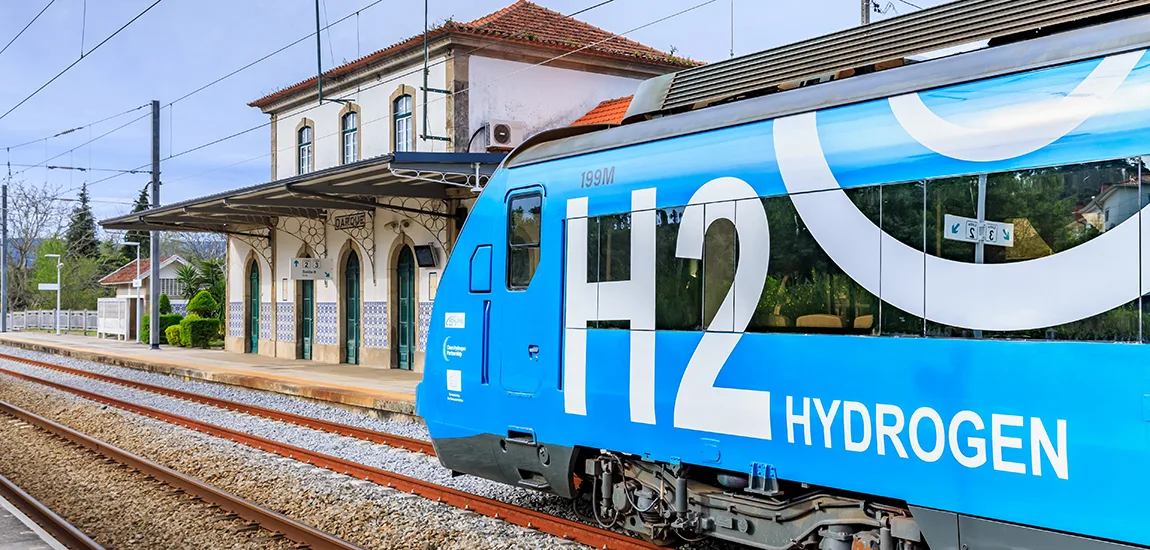
Between 3 and 6 April 2024, the demonstrator train of the European FCH2RAIL project ran on the Minho Line, between Valença and Nine, under a Special Circulation Authorisation issued by Infraestruturas de Portugal in December 2023. It was the first hydrogen train in Portugal. The line has been electrified as far as Valença since 2021. The train is a former three-car Renfe Civia unit fitted with fuel cells and lithium titanate batteries, which uses the overhead line where there is one. MEDWAY provided the drivers, Stellantis the refuelling in Porriño and Iberdrola the green hydrogen.
The consortium brought together CAF, Renfe, Adif, the German Aerospace Center (DLR), Toyota Motor Europe, the Spanish National Hydrogen Centre, Stemmann-Technik and Infraestruturas de Portugal, with a budget of more than 14 million euros, about 70% of it from EU funds. The project ended in late 2024, with more than 10,000 km in hydrogen mode. The partners present the hydrogen hybrid train as an alternative to diesel, with its competitiveness still to be assessed.
Conclusions
- In the Delft study, batteries are the most efficient option. They use far less energy on board than hydrogen and, with renewable electricity, have no emissions. They suit partly electrified lines and sections without overhead wires of up to about 100 km. ÖBB has a framework contract for up to 120 FLIRT Akku trains, 23 already ordered, and Lower Saxony is to launch a tender for 102 battery trains.
- Hydrogen has the longest range. With more than 1,000 km per fill, it is seen as the option for long lines without overhead wires, over 200 km. But it uses more energy, in the Delft study only cuts emissions when produced with renewable electricity, and needs its own refuelling stations.
- Hydrogen trains also use batteries. The FCH2RAIL train also uses the overhead line where there is one. CER recommends a case-by-case assessment: batteries for short and medium routes without overhead wires, or long but partly electrified ones; fuel cells for long non-electrified lines.
- For freight, the solution is still to be found. For now, DB Cargo is relying on dual-mode locomotives and HVO. The AERRL study points to hydrogen for heavy freight, but CER stresses that there is no experience yet with locomotives for heavy loads, nor refuelling infrastructure.
- Portugal has a starting point. About 30% of the network still has no overhead wires. FCH2RAIL showed that a hydrogen train can be authorised and tested on the Portuguese network. A study like the Delft one, comparing the energy and emissions of the alternatives on Portugal's lines without overhead wires, completed with a cost analysis, would help choose the solution for each line.
Sources
- CP, "Comboios elétricos em Portugal"
- CER, "Alternative Propulsion Technologies in the European Railway Sector", 2025/09/22
- Alstom, "Une première mondiale : 14 Coradia iLint vont entrer en service commercial", 2022/08/24
- Railway-News, "Austria: ÖBB Orders FLIRT Akku Battery Trains from Stadler"
- Railway PRO, "ÖBB orders seven more FLIRT Akku trains"
- International Railway Journal, "Battery train enters passenger service in Britain", 2026
- Kapetanović, Núñez, van Oort e Goverde, "Energy use and greenhouse gas emissions of traction alternatives for regional railways", Energy Conversion and Management 303, 2024
- Hydrogen Insight, "Hydrogen trains up to 80% more expensive than electric options, German state finds", 2022/10/20
- Railway Gazette International, "Transport authority opts for battery rather than hydrogen trains", 2023/08/10
- AERRL / eolos, "Study on alternatives to fossil diesel use in railways", 2022
- Railway-News, "GWR Battery-Electric Train Achieves World Record with 200 Miles on a Single Charge", 2025
- Rail Magazine, "Great Western Railway battery train breaks single charge distance world record", 2025/08/20
- New Atlas, "Stadler FLIRT H2 sets Guinness World Record", 2024/03/27
- SNCF, "Hydrogen TER"
- Infraestruturas de Portugal, "Primeiro comboio a hidrogénio realiza testes na rede ferroviária portuguesa", 2024/04/15
- International Railway Journal, "FCH2Rail hydrogen train tested in Portugal", 2024
- DLR, "The first hydrogen-powered train has been tested on the Spanish and Portuguese railway network", 2024/12/03
- Railway PRO, "The FCH2RAIL project has been successfully completed", 2024